
Celebrate, learn, reflect and connect.
National Indigenous Peoples Day, celebrated each year on June 21, honours the cultures, traditions and contributions of First Nations, Inuit and Métis Peoples across Canada.
By engaging with stories, art, the land and community activities, children and families can build respect, curiosity and a deeper understanding of Indigenous cultures and connections to the land.
Whether attending a public celebration, exploring local resources or engaging in activities at home, National Indigenous History Month and National Indigenous Peoples Day provide opportunities to deepen understanding, build connections and continue learning throughout the year.
Ideas for Observing Indigenous Peoples Day as a Family
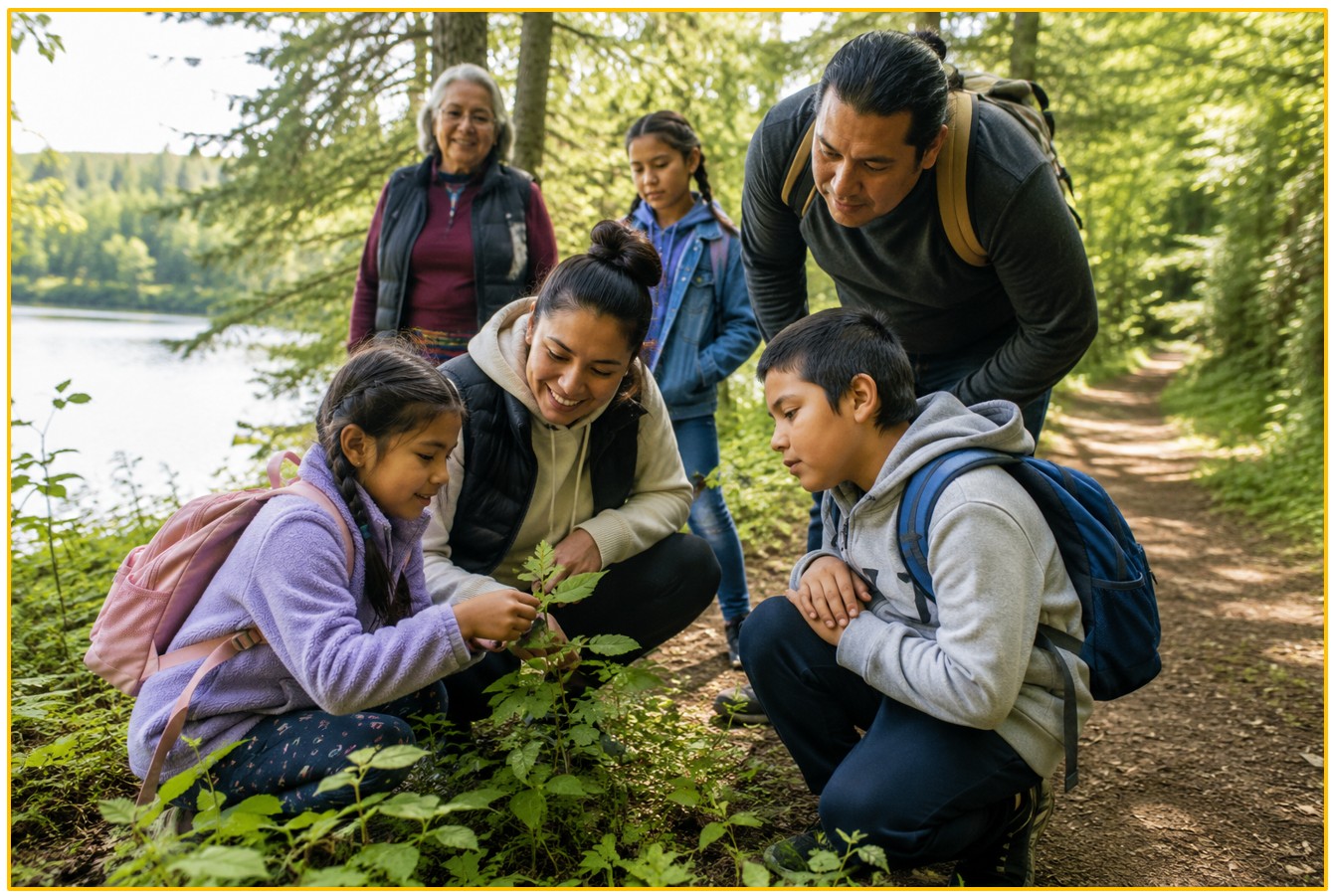 National Indigenous Peoples Day is a time for families to learn together about the cultures, histories, and ongoing contributions of First Nations, Inuit, and Métis Peoples.
It is also a time to reflect on the land we live on and recognize that Indigenous Peoples have cared for these lands for countless generations.
Children are naturally curious about the world around them. Through stories, art, language, and time outdoors, families can explore Indigenous cultures in ways that encourage respect, connection, and learning.
The activities below offer simple ways to begin learning together—at home or in your community—while building appreciation for Indigenous perspectives and ways of knowing.
 Attend a local celebration or Pow Wow
Many communities across the GTA and beyond host Pow Wows and Indigenous Peoples Day events with drumming, dancing, storytelling, and artisan markets. These gatherings are open to everyone and offer a meaningful way to learn through experience.
Pow Wows are also deeply connected to land, community, and tradition — often held outdoors in spaces where people gather to honour relationships with the land and with one another.
Try this with children:
- Listen for the drum and think about how it connects people together like a heartbeat of the gathering
- Notice the outdoor space and talk about how people are using and respecting the land
- Ask: “How does being outside change the way this celebration feels?”
 Learn whose traditional territory you live on
Every place has a history, and Indigenous Peoples have cared for these lands since time immemorial. Learning whose land you live on helps build awareness of the ongoing relationship between people and place. Explore: Native Land Digital (Territory Map Tool)
Try this with children:
- Look up your home or school and explore the territory together
- Say the Nation(s) name aloud and learn it with respect and care
- Step outside and ask: “What do you notice about this land today? What might it have been like long ago?”
- Talk about how people and the land are connected
 Share books written by Indigenous authors and illustrators
Help children experience authentic stories, perspectives and cultural teachings. Books by Indigenous authors share stories, teachings, and perspectives in their own voices. Explore: GoodMinds.com (Indigenous-focused bookstore in Canada)
Try this with children:
- Look for stories where the land, animals, or water play an important role
- Ask: “What does the land or nature teach in this story?”
- Draw a map of where the story takes place
 Learn a few words in an Indigenous language
Languages carry knowledge about land, relationships, and ways of understanding the world. Many Indigenous languages include words that describe land, weather, animals, and natural cycles in very specific ways. Explore: First Peoples’ Cultural Council (Language Resources)
Try this with children:
- Learn a greeting or a word connected to nature if available
- Practice saying it together with care and respect
- Ask: “How might language help us understand the land differently?”
 Listen to Indigenous music
Indigenous music includes drumming, singing, folk, rock, hip-hop, and more. Many songs reflect connection to land, identity, and community. (CBC Indigenous Music)
Try this with children:
- Close your eyes and imagine the landscapes or stories the music might be connected to
- Tap out rhythms together, like the heartbeat of the land
- Ask: “What kind of place do you imagine this music coming from?”
 Watch a film by an Indigenous filmmaker
Films and documentaries share Indigenous stories from Indigenous perspectives, often highlighting relationships to land, community, and history. Explore: National Film Board of Canada
Try this with children:
- Notice outdoor settings and talk about how land is shown in the story
- Ask: “How do the people in the film relate to the land around them?”
- Draw or describe the places you saw in the film
 Visit an Indigenous art exhibit
Indigenous art often reflects land, water, animals, family, and memory. Art can show how deeply connected identity is to place.
Try this with children:
- Look for symbols of animals, plants, or landforms in the artwork
- Ask: “What parts of nature do you see in this piece?”
- Talk about how artists might be sharing stories about where they come from
 Support Indigenous-owned artists, authors, or businesses
Supporting Indigenous creators helps sustain communities and often supports work that is deeply connected to land, culture, and tradition. Explore: Indigenous Tourism Canada
Try this with children:
- Look for art or products inspired by land, animals, or cultural teachings
- Ask: “What story might this artist be sharing about their home or community?”
- Talk about how supporting artists helps keep culture strong
 Reflect and continue the learning journey
Taking time to reflect helps children connect learning to the world around them. Indigenous teachings often emphasize ongoing relationships—with people, land, and community.
Try this with children:
- Take a nature walk and encourage children to observe the plants, animals, waterways and natural features around them. Many Indigenous cultures teach the importance of learning from and caring for the land, making outdoor exploration a meaningful way to connect with these teachings.
- Ask: “What did you notice about land, stories, or nature today?”
- Think of one way your family can care for the land or learn more throughout the year
 Learn More About Indigenous Peoples in Canada
National Indigenous Peoples Day is an opportunity to learn and celebrate—explore these trusted resources to deepen your understanding of Indigenous cultures, histories, and perspectives.
- National Centre for Collaboration in Indigenous Education (NCCIE)
A national hub with videos, stories, and lesson plans that share Indigenous knowledge and education initiatives from across Canada.
- National Centre for Truth and Reconciliation (NCTR)
Resources and learning tools to understand residential schools, their legacy, and the path toward reconciliation.
- The Canadian Encyclopedia – Indigenous Peoples Collection
Accessible articles, timelines, videos, and learning materials on Indigenous histories, cultures, and perspectives.
- Indspire
A leading Indigenous organization supporting education, with programs and resources for students, educators, and families
- TDSB Urban Indigenous Education Centre
Toronto-based resources and learning opportunities that support understanding of Indigenous perspectives in education.

Community Celebrations
Explore opportunities to experience Indigenous cultures through music, dance, storytelling, art, food and cultural demonstrations while learning directly from Indigenous community members and organizations.
Toronto Area Events
National Indigenous Peoples Day Sunrise Ceremony (City of Toronto) | Hosted by the City of Toronto, this is one of the most meaningful public observances of the day and includes a Sacred Fire, teachings, ceremony, and community breakfast. The 2026 ceremony is scheduled for June 21 at Biidaasige Park.
Toronto Indigenous Arts Festival | A free, family-friendly celebration featuring music, dance, workshops, artisan vendors, food, Métis jigging, Inuit drum dancing, Pow Wow dance demonstrations, and traditional games. Scheduled for June 20 at Biidaasige Park.
Jamii’s Annual Indigenous Peoples Day Celebration 2026 | This celebration takes place on June 21st at David Crombie Park. Every year this event brings the community together to honor Indigenous cultures, traditions, and contributions through live performances, art exhibitions, storytelling, and more.
Na-Me-Res Traditional Pow Wow | A long-running, family-friendly Pow Wow featuring traditional dancing, drumming, Indigenous vendors, food, and cultural learning opportunities. The 2026 event is scheduled for June 13 at Dufferin Grove Park.
Peel Region
National Indigenous Peoples Day at Celebration Square in Mississauga | A major public celebration featuring Indigenous performers, drumming, artisan vendors, cultural presentations, family activities, and a performance by Tia Wood. Presented in collaboration with the Mississaugas of the Credit First Nation. Scheduled for June 21.
National Indigenous Peoples Day at Garden Square in Brampton | The City of Brampton invites residents to recognize National Indigenous History Month and National Indigenous Peoples Day on Saturday June 20th in Garden Square. Enjoy live music and shop one of a kind creations from local Indigenous- owned businesses.
York Region
National Indigenous Peoples Day Celebration | Join Odeiwin on June 21, 2026, for a community-centered National Indigenous Peoples Day celebration at Boynton House at Richmond Green Park in Richmond Hill. This Indigenous-led gathering will bring people together through culture, creativity, learning, and connection in a good way.
For Indigenous History Month events taking place in York Region, go to National Indigenous History Month in York Region
Libraries, Museums & Community Centres
Many libraries, museums, and community centres offer meaningful opportunities to learn about and celebrate Indigenous cultures throughout June, offering a wide range of family-friendly programming.
Museums & Cultural Centres
Native Canadian Centre of Toronto (NCCT) | A central hub for Indigenous culture, programs, language, and community events in Toronto.
Toronto Council Fire Native Cultural Centre | Offers cultural programs, counselling, and community supports grounded in Indigenous traditions.
Native Earth Performing Arts | Canada’s oldest professional Indigenous theatre company, showcasing storytelling and performance.
Red Sky Performance | Indigenous-led contemporary dance and theatre company sharing global Indigenous stories.
Royal Ontario Museum (ROM) | Extensive Indigenous art, history, and culture collections. Special exhibitions and family programming throughout June
Aga Khan Museum | Intercultural exhibits and community learning programs. Often partners with Indigenous artists and educators for public programming
Art Gallery of Ontario (AGO) | Indigenous art exhibitions and artist talks. Family-focused drop-in workshops and tours
Peel Art Gallery, Museum and Archives (PAMA) | Located in Brampton, Pama features Indigenous history exhibits, local First Nations programming, and community events
Libraries
- City-wide programs including Indigenous History Month events, author talks, children’s storytimes, and cultural workshops
- Multiple branches across Toronto →Branch locator: https://www.torontopubliclibrary.ca/branches/
York Region Public Library Systems | York Region libraries often run Indigenous author spotlights, cultural storytelling sessions, family craft programs, and land-based learning and reconciliation-themed displays
- Markham Public Library
- Vaughan Public Libraries
- Richmond Hill Public Library
- Aurora Public Library
- Newmarket Public Library
- Georgina Public Library
- East Gwillimbury Public Library
Peel Region Libraries | Peel libraries commonly feature Indigenous Heritage Month programming in June, Elder-led storytelling events, craft workshops for families, local history and reconciliation exhibits
Community Centres
These spaces often host family craft days tied to Indigenous themes; cultural performances and workshops during June; drop-in learning activities and community-led reconciliation programming

“The process of reconciliation will take time. It requires learning, listening, and acting together.”
— Inspired by the principles of the Truth and Reconciliation Commission of Canada
We recognize that meaningful celebration must be grounded in reflection and respect. National Indigenous Peoples Day is connected to the ongoing journey of Truth and Reconciliation. As we honour the histories, cultures, and contributions of First Nations, Inuit, and Métis Peoples, we also commit to continued learning, listening, and meaningful action.
This day invites families and communities to deepen their understanding of Indigenous histories and contemporary life across Turtle Island. We encourage everyone to engage with local events, explore Indigenous-authored books and resources, and build meaningful connections with Indigenous perspectives throughout the year.


